
When most people think about bone health, they picture it as something to worry about later — a future problem, not a present one.
But bone health doesn’t suddenly become important at 70. It changes gradually, quietly, over decades. And like a lot of things that matter most for long-term health, those changes are often invisible until something goes wrong.
The Part Most People Miss
Bone loss doesn't announce itself.
You don’t feel your density decreasing. You don’t notice small shifts year to year. For many people, the first indication that something is wrong is a fracture — often from a fall that shouldn’t have been serious.
In the U.S., more than 40% of adults over 50 have low bone mass, which raises the risk of osteoporosis. That's not a rare condition. That’s almost every other person you know over 50.
Waiting for symptoms isn’t a cautious approach. It’s a gamble.
I Know This Firsthand
At 60, I had a routine DEXA scan. I had always been active, eaten well, and considered myself healthy. Bone loss wasn’t something I was expecting.
My scan showed osteopenia.
Now, after seeing hundreds of scans at DexaFit Nashua, I understand how common this is. Bone loss is silent — and it doesn’t always show up in the people you’d expect.
That scan changed how I approached my own health. Once I had a baseline, I got intentional:
Increasing protein, calcium, vitamin D, and K2
Prioritizing heavier strength training — squats, deadlifts, loaded carries
Adding impact work like plyometrics
And, in my case, hormone replacement therapy
Nothing extreme. Just consistent, targeted changes based on what my data actually showed.
Two years later, my T-score improved from –1.7 to –1.2 — a meaningful shift that puts me on track to return to the normal range. If I hadn’t measured, I wouldn’t have known. And without that information, I likely wouldn’t have made the changes that are now improving my long-term health.
That’s the real value of testing: not just the number, but what you do with it.
Why Measurement Matters
If your goal is to stay strong, active, and independent long-term, the most valuable first step is also the simplest: know where you stand today.
A bone density scan measures the mineral content of your bones and helps identify early changes — before they become a larger problem. It gives you:
A baseline to work from
A way to track changes over time
Data to guide decisions about training, nutrition, supplements, and medical care
Without that baseline, you’re guessing. And when it comes to bone health, guessing tends to go one direction.
What a DEXA Scan Actually Measures
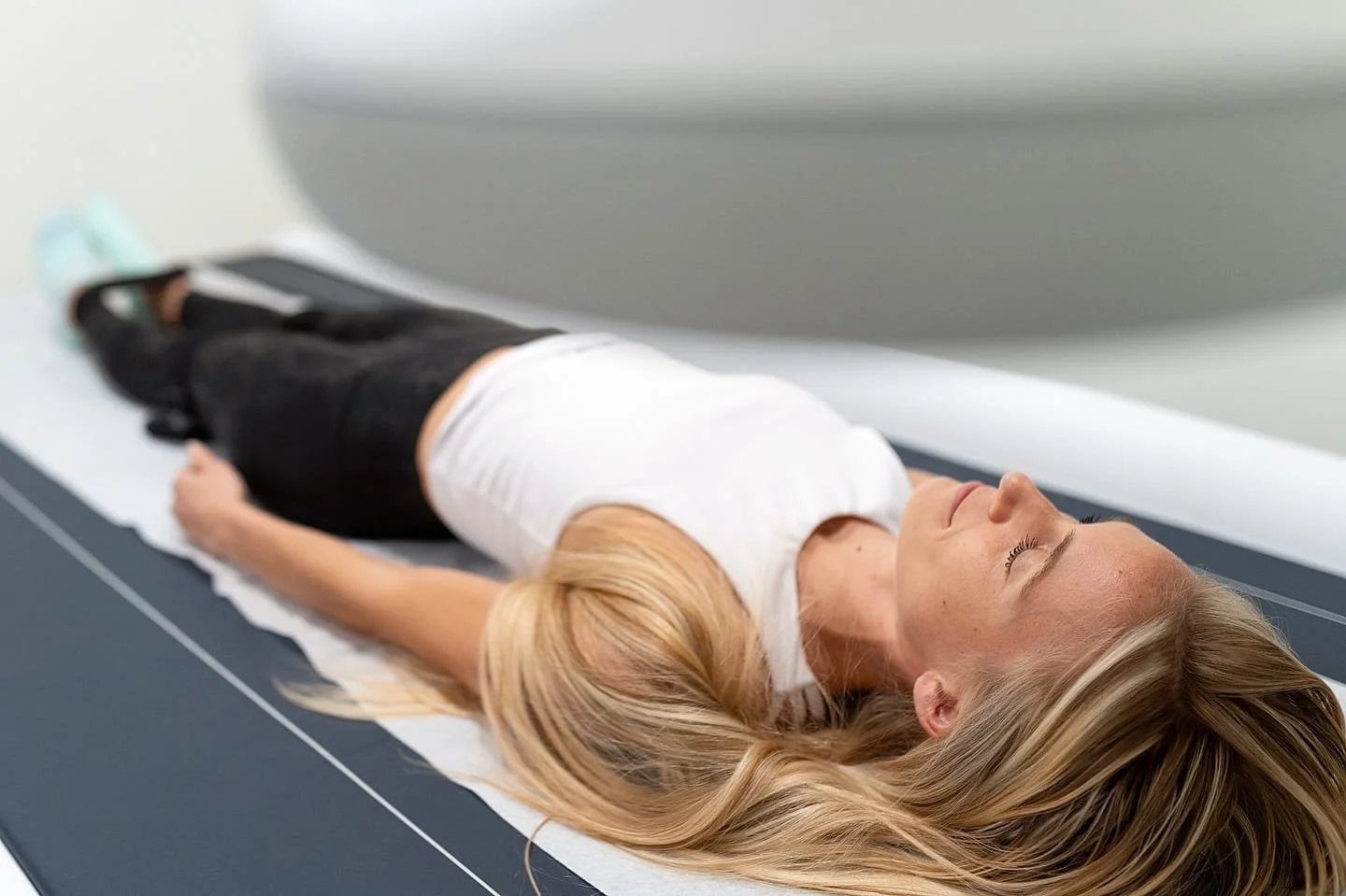
DEXA (Dual-Energy X-ray Absorptiometry) is the gold standard for measuring bone density. It’s quick — just a few minutes — non-invasive, and uses very low levels of radiation, comparable to a few hours of everyday background exposure.
At DexaFit Nashua, we offer two types of DEXA scans. Our total body scan gives you a broad picture of your health — bone density across the whole body, plus muscle mass, body fat, and visceral fat. It’s the right starting point for most people.

Introducing DexaStrong
For those who want a more focused assessment, our DexaStrong scan zeroes in on the hip and spine specifically — the sites most closely associated with fracture risk. It’s the same technology used in clinical settings, with a fully managed service that includes a physician order, radiologist review, and physician consultation. A DexaStrong client might come to us after their doctor declined to order a site-specific scan — often because of age guidelines that don’t always reflect individual risk.
Bone Health Is More Than One Number
That distinction matters because bone density alone isn’t the whole story. Bone strength also depends on structure, quality, rate of turnover, and your overall health history. Two people can have the same T-score and very different risk profiles.
This is part of why the consultation matters as much as the scan itself. The number is the starting point — what you do with it depends on the full picture: your age, your history, your lifestyle, and your goals. Your bone health isn’t static, and it isn’t one-size-fits-all.
A More Proactive Approach
The traditional model of bone health has been reactive: test later, treat after decline, respond after injury.
A more useful approach looks like this:
Establish a baseline earlier
Track changes over time
Make adjustments before problems develop
This isn’t complicated. It’s just a different starting point — one that gives you more options and more time to act on them.
The Bottom Line
Bone health isn’t something to think about “someday.”
It’s something you can measure — and improve — starting now. If you’ve never had a bone density scan, that’s exactly where to begin. Not because something is wrong, but because you’ll want to know where you started when you look back five years from now.
When you have the data, you can make better decisions. It’s that simple.
About DexaFit Nashua
DexaFit Nashua provides advanced health testing to help you optimize performance, longevity, and body composition. Located in Nashua, New Hampshire, we specialize in DEXA scans, VO₂ Max testing, Resting Metabolic Rate (RMR) testing, and more. Our team is dedicated to helping clients get clear, science-based insights into their health, fitness, and fat loss goals.