
Why the Scale Lies in Summer (and What to Measure Instead)
Every July, the same thing happens.
You step on the scale expecting the number to reflect the morning walks, the lighter meals, the extra workouts, and the effort you’ve been putting in. Instead, it barely moves, or worse, it’s gone up.
It’s frustrating. It can even make you question whether all that work is paying off.
But the truth is, the scale was probably never telling you the whole story in the first place. Summer simply makes its biggest weakness more obvious than ever.
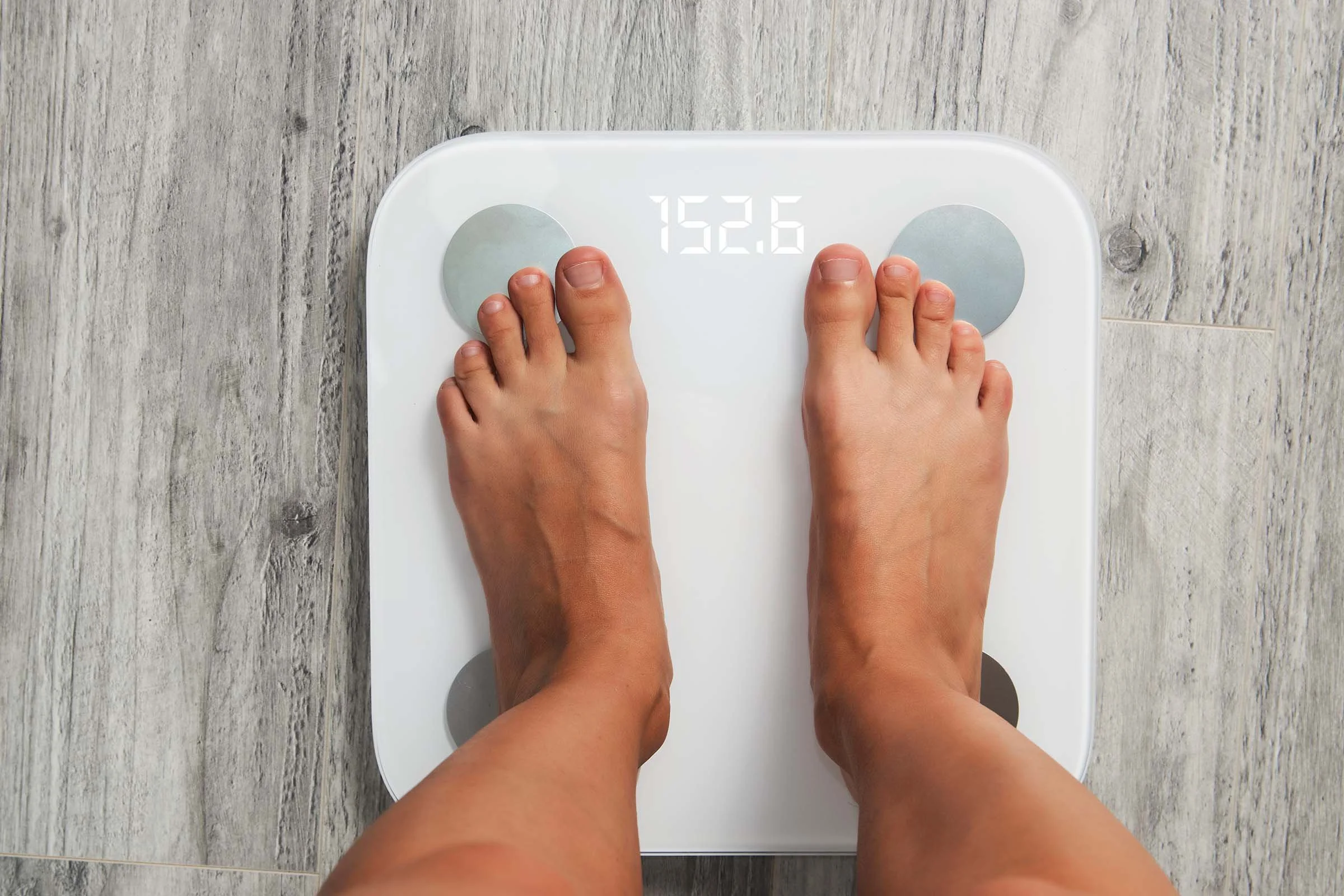
Your Weight Swings More in Summer, and Almost None of It Is Fat
Body weight isn’t a fixed number. It naturally fluctuates throughout the day, and summer adds a few extra reasons for those changes.
Hot weather, changes in hydration, sodium from cookouts and restaurant meals, travel, and shifts in your activity level can all influence how much water your body is carrying. Even eating dinner a little later than usual or weighing yourself at a different time of day can change the number you see the next morning.
Those day-to-day changes can easily add up to a few pounds on the scale, even though your body fat hasn’t changed at all.
That’s because most bathroom scales only measure total weight, and even many “smart” scales estimate body composition rather than measuring it directly. A single number on the scale can’t tell the difference between fat, muscle, bone, food, or water. It simply reports mass, and mass alone doesn’t tell you what’s actually changing inside your body.
What About Smart Scales?
If you have one of the newer bioimpedance scales at home, the ones that promise a body fat percentage along with your weight, you might think you already have this covered. It’s worth knowing what’s actually happening when you step on one.
Bioimpedance works by sending a low-level electrical current through your body and measuring how quickly it travels. Since fat and lean tissue conduct electricity at different rates, the scale uses that signal to estimate your body composition. In theory, it’s a clever idea. In practice, the estimate is highly sensitive to things that have nothing to do with your actual body fat.
Hydration is the biggest factor. Since electrical current moves faster through water, a scale can read a leaner body fat percentage simply because you’re well hydrated that morning, and a higher one the next day because you’re dehydrated, even if nothing about your body has actually changed. Recent exercise, alcohol, caffeine, the time of day, and even how recently you ate can all shift the reading in ways that have nothing to do with real progress.
That variability is exactly why bioimpedance results can bounce around from one use to the next, and why they often diverge noticeably from more precise measurement methods. It’s a reasonable tool for casual, big-picture trends if you use it under the exact same conditions every time. It’s not precise enough to make real decisions from, and it’s not built to catch small, meaningful changes over weeks or months.
What the Scale Was Never Built to Show You
This isn’t just a summer problem. It’s a limitation of the scale itself.
Two people can weigh exactly the same yet have dramatically different body compositions. One may carry significantly more lean muscle and less body fat, while the other has a very different balance of muscle, fat, and bone.
Even more importantly, you can lose body fat while maintaining or building muscle, one of the best outcomes for your health, and see little or no change on the scale.
If your only measure of progress is body weight, you could be making excellent progress without ever seeing it.
What Actually Matters: Body Composition
Body composition tells the story body weight can’t, but it needs to be measured with a method that’s actually precise.
A DEXA body composition scan provides a precise breakdown of your fat mass, lean muscle mass, bone mineral density, and visceral fat. Instead of guessing based on one number, you can see exactly what’s changing beneath the surface.
More importantly, a DEXA scan answers the questions the scale never could:
Are you losing body fat?
Are you maintaining or building lean muscle?
Is your current nutrition and training plan actually working?
When you have those answers, you’re measuring meaningful progress instead of daily fluctuations.
A Better Way to Track the Rest of Summer
This doesn’t mean you need to throw your bathroom scale away.
It simply means it’s the wrong tool for the question most people are really asking.
Most of us don’t actually want to know how much water we’re holding onto after a weekend barbecue or a hot day outside. We want to know whether we’re becoming healthier, stronger, and more resilient.
That’s exactly what body composition helps you measure.
A DEXA scan gives you an accurate baseline so you can track real changes over time, not just the normal ups and downs that happen from one day to the next.
Summer is for making memories, enjoying the outdoors, and building healthy habits, not stressing over a number that changes with every salty meal, long weekend, or hot afternoon.
Know your baseline. Measure what matters. And let your progress be defined by real data instead of daily noise.
About DexaFit Nashua
DexaFit Nashua provides advanced health testing to help you optimize performance, longevity, and body composition. Located in Nashua, New Hampshire, we specialize in DEXA scans, VO2 Max testing, Resting Metabolic Rate (RMR) testing, and more. Our team is dedicated to helping clients get clear, science-based insights into their health, fitness, and fat loss goals.