
Strength Through Menopause: Why Muscle and Bone Are Your Best Investment
There’s a quiet shift that happens for most women somewhere in their forties and fifties, and it often goes unmeasured until something forces the issue. A wrist fracture from a minor fall. A DEXA scan that reveals more lost bone than expected. A growing sense that the body responds differently to the same effort it always handled before.
Menopause is the turning point, and the changes it brings to muscle and bone are real. But “real” is not the same as “inevitable.” The years around menopause are actually one of the most responsive windows you’ll ever have to build the kind of strength that protects you for decades. The catch is that you have to know what's happening, and you have to act with some intention.
What Estrogen Was Quietly Doing All Along
For most of adult life, estrogen works behind the scenes as a protector of both muscle and bone. It helps regulate the cells that build and break down bone tissue, keeping the two processes in a healthy balance. It supports muscle maintenance and recovery. You never had to think about it, because it was simply doing its job.
When estrogen declines through perimenopause and into menopause, that balance tips. Bone breakdown begins to outpace bone formation, and the loss can be surprisingly fast. In the years immediately surrounding the final menstrual period, many women lose bone density at a rate they never see again at any other point in life. Muscle mass becomes harder to hold onto, too, and the gradual decline known as sarcopenia can accelerate.
This is the biology. It’s worth understanding plainly, without alarm, because understanding it is what makes the response possible.
Why Strength Training Becomes Non-Negotiable
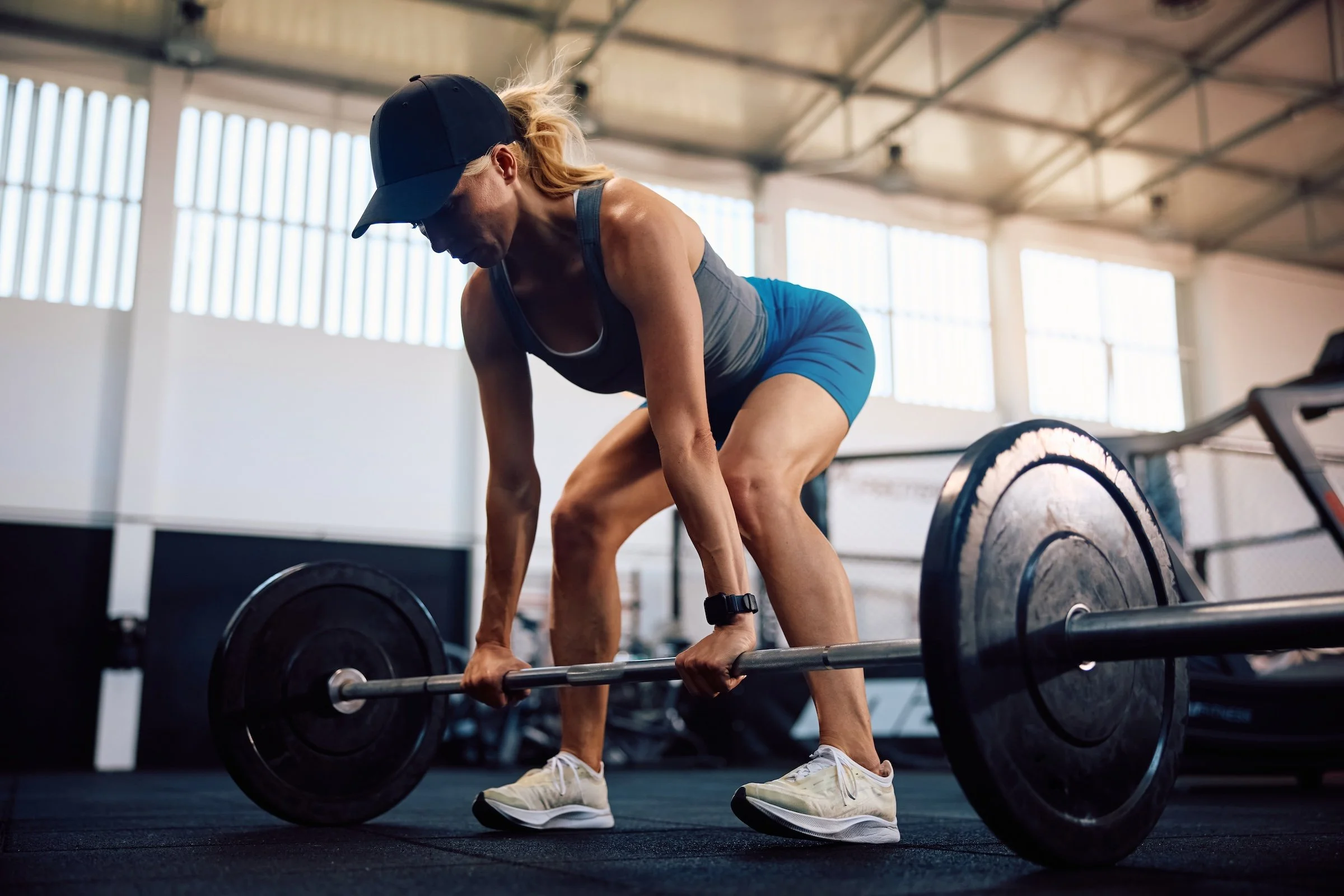
Here’s the encouraging part. Both muscle and bone respond to mechanical load, which is to say they respond to being challenged. When you ask a muscle to work against meaningful resistance, it adapts by getting stronger. When you load a bone through resistance training and weight-bearing movement, it responds by laying down more tissue and becoming denser.
This is not gentle toning. The stimulus that actually moves the needle involves progressive resistance, where the challenge increases over time as you grow stronger. Lifting weights that feel genuinely demanding. Compound movements that load the hips and spine, the two areas where fractures carry the most serious consequences later in life.
For women navigating menopause, strength training does double duty. It preserves and builds the lean muscle that supports metabolism, balance, and everyday function. And it sends a direct signal to bone tissue to hold its ground. Few interventions offer that kind of return, and almost none of them come without a prescription.
Balance and Function Matter as Much as Density
It’s easy to focus entirely on the numbers, but the real-world goal is staying capable and avoiding the falls that lead to fractures in the first place. Strength training improves balance, coordination, and the ability to catch yourself when you stumble. Stronger legs and a stronger core translate directly into a body that's harder to knock over.
This is the part that data alone can’t capture but that strength work delivers anyway. You’re not only building denser bone. You’re building a body less likely to ever put that bone to the test.
You Can’t Improve What You Haven't Measured
This is where having a baseline changes everything. Bone loss is silent. Muscle loss is gradual. Neither announces itself until it's advanced, which is exactly why so many women are caught off guard.
A DEXA scan gives you a precise picture of both your bone mineral density and your body composition, including how much lean muscle you’re actually carrying and how it’s distributed. Rather than guessing whether your training is working, you can see it. A baseline now, followed by a re-scan down the road, turns abstract worry into something you can actually manage and track.
Knowing your numbers also lets you act early, while the window is most responsive, rather than reacting after a diagnosis. There’s a meaningful difference between building strength as prevention and scrambling to rebuild after loss has already set in.
Strength Is a Long Game Worth Starting Now
The women who move through menopause and into their later decades with confidence are rarely the ones who got lucky. More often, they’re the ones who understood what was changing and met it with consistent, progressive strength work, anchored by an honest look at where they actually stood.
It’s never too early to start, and it's genuinely never too late. Bone and muscle respond to training in your fifties, your sixties, and well beyond. The best time to begin building this kind of resilience is whenever you decide to, and the second-best time is the same day.
Want to go deeper on this topic? Join us on June 25 for our live workshop, “Thriving Through Menopause: Strength, Hormones & Health,” where we’ll explore these changes and what to do about them alongside a women’s health nurse practitioner, a registered dietitian, and a strength coach.
About DexaFit Nashua
DexaFit Nashua provides advanced health testing to help you optimize performance, longevity, and body composition. Located in Nashua, New Hampshire, we specialize in DEXA scans, VO2 Max testing, Resting Metabolic Rate (RMR) testing, and more. Our team is dedicated to helping clients get clear, science-based insights into their health, fitness, and fat loss goals.